≡ Menu

Mistakes I’ve made.  Mistakes I’ve seen others make.  Mistakes you’ll probably make at some point along the way.  Find a way to avoid 90% of these and you’re doing pretty good.  Find a way to avoid all 21 and you’re probably a liar.  It’s inevitable that from time to time you’re going to inadvertently anger or frustrate a homeowner.  Sometimes it’s just a conflict of personalities, sometimes the customer is just an odd bird who gets their feathers ruffled over petty issues, and to an extent a small percentage of your customer base will not get along with you very well no matter how nice, competent, and professional you are.  But you can effectively minimize these episodes by taking some common sense approaches to your business.  If growing your business doesn’t matter to you and you enjoy conflict, then by all means, do the following:

  1. Stick a sign in the homeowner’s front yard without asking.  I see this done all the time but it’s always struck me as a little rude and presumptuous.  Of course I use yard signs as a part of our marketing strategy but I always ask first and people are almost always okay with it.  Don’t ask for permission and you can bet that more than half those signs are yanked out of the yard as soon as your truck turns the corner.
  2. Take more than two hours to call back or 12 hours to answer an email.  We live in an age of instant messaging, texting, fast food, and 15 minute oil changes, yet you’re going to wait 24 hours to return a phone call?  What are you, nuts?  People want answers NOW, and the longer you wait the better the chance they’ll move on to your competitor.
  3. Show up late with no call.  Nothing enrages people more than disrespecting their time, so if you’re gonna be late (which is bad enough), at least give someone the courtesy of calling them to let them know.  Most people will forgive your tardiness if you make an attempt to let them know.  Anything more than 10 minutes past an agreed upon time probably merits a call.
  4. Don’t clean up.  This is something I use to struggle with a bit, but I’ve come to understand that many homeowners are downright looney when it comes to dust and debris in their home.  Some people will absolutely lose their mind if you leave even the slightest trace of dust on the floor or counters after the end of each work day, even when it’s a multi-day job.  I recommend taking every precaution possible to minimize dust and to clean up every day until the work area darn near sparkles.  Ignore this one at your own risk.

  5. Blindside the homeowner with surprise costs.  There’s no quicker way to spoil an otherwise good relationship with a customer than to nail them with a $100 surcharge near the end of a $30,000 job.  This is particularly irritating to people when it involves something that you should have anticipated from the beginning.  Didn’t realize that you’d need to buy a new tool to finish the job?  Tough.  It’s on you, not the customer.  Don’t trash your chance for future free construction leads just so you can nickel and dime a good customer.
  6. Take forever to complete a job.  It should go without saying that a four-week long kitchen remodel that was supposed to take 10 days will probably light the fuse of even the most patient homeowner.  Review plans carefully and map out daily activites before you begin so that your estimate of a completion date is accurate to within a day or two.  This is one of those areas where you’ll want to under-promise and over-deliver.  Better to finish early than late.  I’ve learned this one the hard way on a few occasions.
  7. Do crap work.  If you’re a glutten for punishment and really enjoy getting nightly phone calls from infuriated customers, then go ahead and speed through your jobs with no regard for quality.  If not, then take those extra few minutes or hours to make sure your work is outstanding and you’ll avoid untold numbers of massive headaches.  You don’t really want to drive 30 minutes back out to a home just because you missed one small spot of paint, now do you?
  8. Lack organization. If your company is lacking in systems and standard procedures then it will be tough to turn a profit, let alone grow the company.  If when a potential customer calls you have to put them on hold for two or three minutes while you search through stacks of papers on the floor for a copy of their estimate, this one definitely applies to you.  Again this is related to wasting peoples’ time.  Good organization will go miles in giving you the image of professionalism and experience; bad organization will cause homeowners to sometimes lose their cool and often times run to your competitors.  If you have your heart set on learning how to become a general contractor, just know that organization will be especially important for you because you’ll have to manage not only your own people but also the subcontractors.
  9. Come to the job unprepared. Nothing says competence like showing up that first day for a major tile job but forgetting to bring mortar.  Or telling the homeowner halfway through painting a room that you ran out of paint and need to go buy more.  These sorts of dumb mistakes not only tick off customers, they cost you valuable hours during the day.  Result: the customer gives you a negative review on Angie’s List, and you just finished a project where you averaged $5 per hour because you had your head up your ass.  Congratulations.
  10. Be inflexible.  As I’ve said before, you’ve got to stand firm when it comes to pricing your work or performing free services, but that doesn’t mean that you should absolutely refuse to work with the customer when it comes to small requests and adjustments.  If they ask you up front to split what should be a one-day job into two days to accommodate a major event at their home, try to make it work.  Just build the added inconvenience into the estimate and use those two half-days off to catch up on paperwork, give other estimates, or start other jobs.
  11. Don’t listen.  It’s a common human characteristic that we want our concerns to be heard, and we don’t want to have to repeat them.  So your job as the contractor, particularly during the estimate/first meeting is to listen as much as it is to sell.  Don’t just bull-rush them with a boilerplate sales pitch; be receptive to their unique questions, fears, and expectations and then provide clear, specific answers.  People will appreciate your willingness to honestly and thoroughly address their particular situation, and the ultimate result will be a higher closing ratio for your business.  If you insist on talking over them or if they have to ask you the same question two or three times before getting an answer you are on the fast-track to a failing business.
  12. Give unrealistic expectations.  This one can get a little tricky because while your marketing and advertising should play up your accomplishments and show potential customers what is possible, you also need to give them realistic expectations before things get underway.  Don’t promise them a Homearama-grade kitchen with vintage kitchen cabinets if they only have a $5000 budget and live in a 1000 square foot home.  By delicately lowering expectations up front you’ll end up with much happier customers at the end of the job.
  13. Be rude or dismissive.  This is a no-brainer but I’m always amazed by how many businesses I come across that treat their customers like chumps.  Whether it’s rooted in a lack of basic manners or just a hatred of humanity in general I can never tell, but I can tell you that eventually these people will be out of business.  It might not be tomorrow, it might not be next year, but eventually karma has a way of chopping down the jerks.  And if karma doesn’t do the trick then the fact that I and 100 other disgruntled customers are going out of our way to badmouth your company probably will.  Word of rotten customer service spreads faster than wildfire.
  14. Lack job skills.  Suffice it to say that if you’re bringing “how-to” books to a customer’s home while doing a remodel, they probably won’t be a happy camper.  Not only that, but if you’re taking on work for which you’re not qualified you’ll be so slow that earning a respectable amount per hour will be virtually impossible.  In fact, you might even lose money.  Don’t be afraid to tell somebody that you have neither the experience nor the tools to take on projects outside of your skill-set.  They’ll respect your honesty and it’ll give you an opportunity to send some business to another local contractor who can handle the job.  Odds are he’ll send you some leads for your specialty down the road.  Reciprocity can be a powerful business-booster.
  15. Wear your emotions on your sleeve.  Sometimes customers are jerks, but if you’re smart you’ll keep your cool as much as possible.  This is one of those professions where you’ll need to develop a thick skin and lots of patience.  People will tick you off, they will disrespect you, they will ask millions of stupid questions, but you need to understand that by rolling your eyes or showing your irritation you’ll be magnifying the situation by a factor of ten.  Act perturbed by a homeowner’s concerns and there’s a good chance that they’ll go from being slightly distressed to being Bob Knight.  The more you can tolerate crazy customers the better off your business will be in the long run.  Bite your lip, swallow your pride, and watch your wallet get fat.
  16. Give less attention to low-dollar jobs.  You’d be wise to focus your ad dollars on areas of town where people have gobs of money, but if somebody calls you from a shady part of town with a smaller job request, do them the courtesy of listening to their needs and offering your services.  This goes back to basic decency and respect for people (regardless of their net worth), and though they may not be able to afford your services you can at least call them back to offer other solutions or advice.  In some cases it’s as simple as explaining to them how to fix a problem on their own.  Or find a way to schedule the job so that it coincides with other similar jobs in the same area.  You never know when that small-dollar job could result in a referral down the road that drops a monster project in your lap.
  17. Put people on hold to take another phone call.  Recently I called a local company to ask about having a windshield replaced, and in the middle of the conversation the guy put me on hold to take a call from another prospective customer.  About half a second later I ended the call and later that day gave my business to someone else.  Loss to me: nothing.  Loss to said dipwad: about $300.
  18. Lack of communication within your company.  Less common in a smaller business, but once your company starts to grow you’ll want to keep a close eye on this one.  It’s always frustrating to me when I make a specific request to the salesman or estimator that never actually makes its way to the people performing the work.  Bottom line: the customer sees your company as one entity, one body, one cohesive unit.  If the left hand isn’t talking to the right you should expect to encounter some fire-breathing homeowners.
  19. Be condescending.  If you have a habit of boosting your self-esteem by trying to make others feel stupid then prepare for the wrath of the normally calm soccer mom.  She may not know as much about installing cabinets as you do, but give her the impression that you think she’s dense and she’ll make your life a living hell until job completion.
  20. Talk about politics or religion.  I can’t tell you how many times I’ve been (foolishly) talking politics or some other garbage with my brother at someone’s home with the assumption that they were out of earshot only to look up and see them standing there like Houdini.  You’ve got a 50% chance that they agree with your views and will laugh it off, but if they’re in that other 50% you could be in some deep doo-doo.  Americans get pretty fired up about their politics and their religion so you’d be wise to keep your opinions on these topics to yourself until after work hours.
  21. Forget to send a thank you letter to the customer.  How would you feel if you spent $40,000 on a remodel and never received a thank you in the mail?
{ 6 comments }

Today I dropped my car off at the shop that I’ve been using for several years.  I’ve spent many thousands of dollars there, and had every intention of spending tens of thousands more over the remainder of my lifetime.  But today was different.  Today they probably lost me forever.

Chuck Was Worth His Weight In Gold

The problem is that the manager whom I always liked and trusted (Chuck) and who pretty much ran the entire show up front now seems to have been replaced or has moved on.  He’s gone.  Poof.  Adios.  Where he’s gone to I have no idea but his replacement is, well…he’s not Chuck.  I had complete trust in Chuck, not only because he knew everything there was to know about cars, and not only because he demonstrated respect and kindness, but also because he never tried to gouge me.  Dude was a straight-shooter.

Steve Is A Value Suck

His replacement, Steve, immediately made less than a stellar impression.  Actually, I should say that he wasn’t awful.  He just wasn’t Chuck.  He wasn’t especially friendly or helpful.  He didn’t really give a crap who I was or what my history was with the shop.  And he was a little shifty with the pricing of the work that needed to be done (it started much higher than I expected and then oddly began to slide down the scale as I expressed surprise and asked more questions).  Something in my gut just doesn’t trust him.  In short, it was similar to past experiences I’ve had with other shops.  Which is to say that my favorite car doc is now just….nothing special.  There’s no reason for me to keep driving across town to get there.

Sadly, this lifetime customer is a lifetime customer no more.

Your Competitive Advantage Could Amount To Just One Or Two Key People

Why Chuck is gone I don’t know.  Perhaps he just moved away or wanted to do his own thing.  Or maybe they just didn’t want to pay him what he was worth.  If that’s the case, then what a terrible decision.  It’s a decision that will shift my allegiance (and dollars) to someone else going forward, and I can only imagine that many other longtime customers feel the same way.

The cumulative losses over time could likely be in the hundreds of thousands of dollars for this business.  It boggles the mind.  Save a penny on payroll…lose thousands from the top line.

How much is YOUR superstar employee really worth?  Probably more than you think.

{ 0 comments }

Amazon recently announced that they were getting into the home services link-up game, and I must confess that initially I was skeptical.  Just because they’re the biggest conduit for physical products in the history of the world doesn’t necessarily mean that they know jack about efficiently bringing together homeowners and service providers.  Or so I thought.

Upon further inspection of the service and how it is being incorporated into their site, I have a completely different opinion.  I now believe that this will be a total game-changer for many companies, especially handyman and installation services.  Though the service is brand-spanking new and only available in some areas, with time Amazon users will become more and more accustomed to using it, and eventually it will become a massive stream of income for organized and quality-driven pros all over the country.

Ride The Wave Or Get Left Behind

Amazon is the internet monster that just won’t quit.  In 2014 there were over 270 million active accounts around the world, and this number seems destined to climb over half a billion within the next five years.  The company is a complete beast, just in case you’ve been living under a rock for the last decade.  In short, a platform like that gets you access to a ridiculous number of people.

And these are the kinds of people that you should want access to, just so we’re clear.  A great majority of Amazon shoppers are people who place a great value on their time and quality products.  They are less concerned about finding the absolute best deal.  This is the kind of customer that every home service provider should be salivating over.  These aren’t the types who are going to haggle with you on price.  They just want it done quickly and done right.  If they have to pay a premium for these conveniences then they are usually fine doing so.  Can you say “ca-ching?”

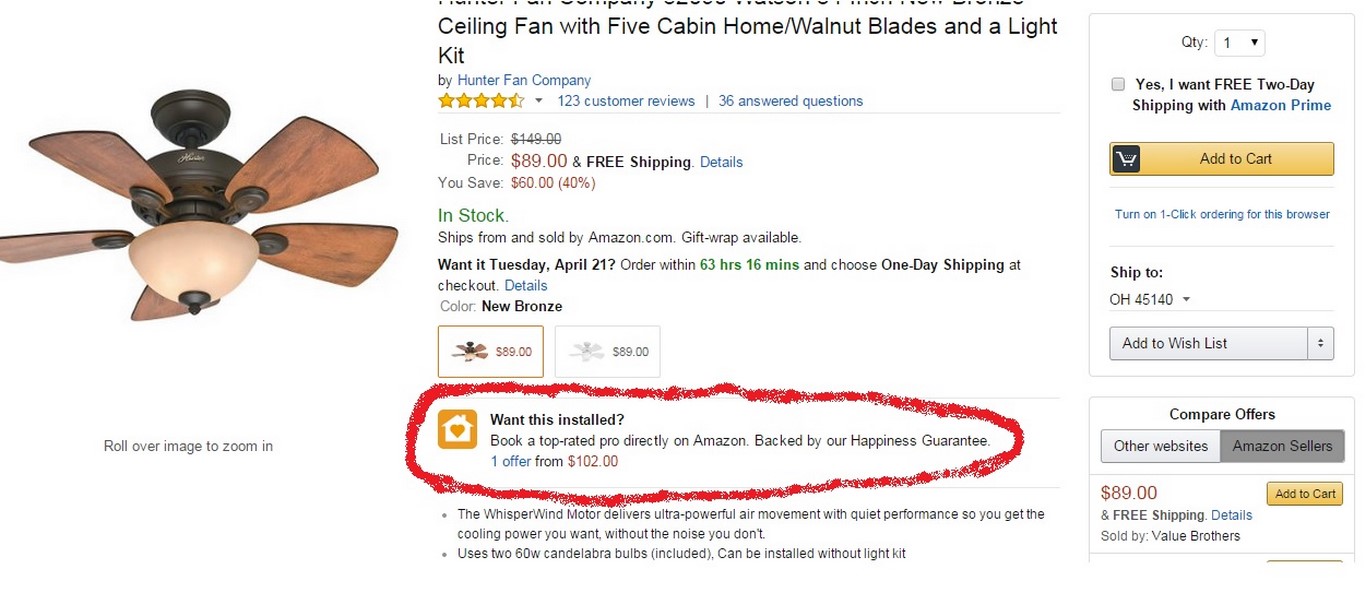
The way that Amazon is integrating this service into their product listings is actually very smart.  Consider this random listing I found for a ceiling fan:

RC-amazonhomeservices (Copy)

See the text in that red circle?  This is where Amazon is giving you, the local handyman, instant access to their prized customers.  This is very valuable real estate, and it’s my belief that the first ones to rush in and grab it will be rewarded handsomely as time goes on.  Reviews will accumulate quickly from your customers, and you could quickly build a lead that will be difficult for others to overcome in the future.  Get in now and treat these customers like gold.  Reviews are everything on Amazon.  By the time your local competitors have awoken from their slumber and realized the potential, you’ll already be miles ahead.

The real value for you is in the long-run.  Consider that many of these customers will likely hire you again and again in the future for everything from installing shelving to fixing a leaky faucet.

Apply here for Amazon Home Services.  DO IT NOW and thank me later.

{ 4 comments }

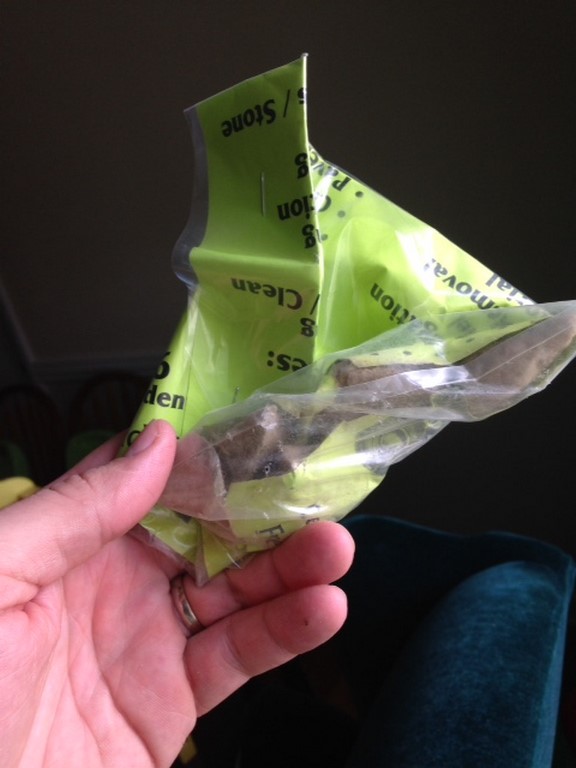
I see a lot of bone-headed marketing “tactics” by contractors in my city, but what I just found on my driveway was so exceptionally ridiculous that I just had to share it.  So, I’m walking out to check the mail and notice that there’s something near the end of my drive.  As I get closer I can begin to see that it is some sort of folded up marketing flyer in a clear plastic baggie.  I bend over and pick it up.  It is surprisingly weighty.  Flipping the baggie over I see that it contains not only a bright green flyer but also five or six rocks.

IMG_1326 (Copy)

Nothing says professionalism like a baggie full of rocks in the driveway.

Now, I’ve actually heard of this “technique” before, but this is the first time I’ve actually seen it implemented in the real world.  Probably because it usually doesn’t make it past the “oh wait, this is a really dumb idea, Bob” stage.  I won’t name the company involved with this piece of ingenuity, and I’m sure they think they’re being really clever, but this is a perfect example of how not to distribute your company literature.

I know what these guys are thinking: “We’ll save loads of time by simply driving down every street in this town and chucking our rock-filled bags out the window as we go along.”  It’s no doubt true that such an approach will cover more ground in any given time frame versus someone walking door-to-door, and the sheer number of homes one could reach in a single day is probably astonishing.  But I have to think that the conversion rate is so insanely low that it renders the entire strategy POINTLESS.

If nothing else, it probably just ticks people off: “These jerks just threw a sack of rocks on my driveway…what the f#%@!”  It’s just rude and annoying.  It’s not going to win any business.  And it wreaks of desperation and amateurism.  The amount of time they spent at home filling thousands of bags with rock and stapling them shut could have been used to do something that actually works, like starting a blog.  But I guess that would make too much sense.

{ 3 comments }

Most smart contractors and service business owners know that pursuing construction sales leads is crucial to success, but in general they tend to lean towards more traditional strategies that have been used for decades.  Sure, cold-calling, flyers, mailers, and networking groups have their place, and should be part of a larger marketing plan.  But far too many contractors dismiss online-based job leads as a viable complement to their real world strategies.  The reasons for this are many, but none of them hold water.

To be blunt, there are two reasons why fellow contractors or service professionals might try to tell you that chasing internet leads is a waste of time.  Reason one is that they are ignorant and clueless.  Reason two is that they know full well just how powerful online marketing is and don’t want to create any more competition for themselves in their local market.  While the first reason is inexcusable, the second is more understandable.  After all, what sane entrepreneur would willingly share the secrets of customer acquisition that he has discovered with his local competitors?

Construction Sales Leads

There are many methods for generating construction sales leads online, but some are more effective than others.

Consider yourself fortunate, however, because I’m going to reveal a few secrets right now.  I’m going to give you some, but not all of my strategies, just in case you happen to be one of my local competitors.  I have to keep a few tricks up my sleeve in order to maintain my competitive edge.  Hopefully you all can understand that.

I should start by saying that generating construction sales leads online could very well catapult your business to a whole new level, so you need to be ready for the increase in the volume of work.  If you’re not prepared then you could quickly get buried by estimate requests and new projects.  Best to start slow and work your way up as your equipment, systems, and personnel adjust.  Ready for the challenge?  Alright then, let’s get on with it.  Here are some tips to start scoring online contractor leads on the cheap:

Tip #1:  Create a blog and start writing.  I see you rolling your eyes but if you ignore this one then your are a straight-up fool.  Building online content that is tailored to your local audience is just smart business because it gets you in front of the millions of people who no longer use their phone book and who need to Google every single problem and question that they encounter.  If starting a site scares you or you can’t write to save your life then hire somebody to do it for you.  The investment will pay off a hundred fold over the long run.  Example: A homeowner in your city (let’s say Dallas) has a clogged drain and doesn’t know what to do.  He goes to Google and searches “plumbing help Dallas”.  The first result shows a blog post (written by you) titled “Helpful Tips For Dallas Plumbing Issues”, in which you laid out a few suggestions for DIY enthusiasts whose particular plumbing issues are geo-specific (due to the city water content, the extreme temperature swings, or what have you).  Keep in mind that most people who think they can take on a project on their own end up calling a professional because they don’t have the tools, time, or skills to finish things up.  So take a big guess which local plumber they’re going to call when it’s time for help.  They’re going to call you, of course (the net savvy pro who must be qualified because he has his own fancy blog and website).  Check out my comprehensive series on how to start a blog that will blow the doors off your business.

Tip #2:  Learn as much as you can about ethical, white hat search engine optimization and apply this knowledge to your blog and/or website.  This relates to secret #1 but is the extra component that can really take your blog and brand to the next level.  This topic deserves several dedicated posts, but for now I’ll give you a few tips to get started.

  • The title tag of your blog should include your service and city name.  “Kitchen Remodeling in Miami, FL” is a good example.  This should be an accurate representation of what you do and where you work.  It’s a helpful piece of information that will not only pull in search traffic but will signal to the search engines that your site is relevant.
  • Each post and page should have at least 500 words of quality content, and should be as relevant as possible in terms of the services you offer and the city or state you live in.  The more useful information you can provide the more favorably you’ll be viewed by the search engines.  The more posts the better.  The more frequent your posts the better.  The search engines like big sites that are updated frequently with great information.  In simple terms, show your blog some love and Google will probably love your site.  This tends to result in higher rankings, greater traffic, and more business.
  • Your blog’s domain name (URL) should include your main service and city name.  An example of a good domain name would be ChicagoRoofingPros.com.  An example of a poorly chosen domain name would be JackTheShingleHopper.com.  Jack might be the most experienced roofer in the Windy City but if the words “Chicago” and “roof” are not in his domain name then he is making it harder for the engines to know what his blog about, which makes it harder to get a high natural ranking.

Tip #3:  Collect potential customers’ email addresses through a box on your blog or website.  Think most people are afraid to give up their email to complete strangers?  Think again.  If given the right incentive, many people will happily join your email marketing list.  Offer them $25 off their first service in exchange for their email and phone number.  In no time you’ll have a huge list that you can go back to again and again whenever sales are slow or you’re running a new promotion.

Tip #4: Expand your presence on the internet with viral marketing and social networking.  This could be as simple as creating funny YouTube videos about your company.  Or it could mean that you devote 15 minutes each day updating your company’s Facebook and Twitter accounts with fresh information and enticing promotions.  Widen your net on as many different platforms as possible and once in awhile you will catch a monster fish.  Even if these tactics only gain you one extra kitchen remodel per month isn’t that time well spent?  The best part is that these are free construction leads, and only put a small ding on your time.

Tip #5:  Utilize Google AdWords.  We’ve used this program for years and it is one of the biggest drivers of new business for our company.  Ignore it at your own peril.  Some contractors are afraid of the pay-per-click system, but I have no idea why because Google has this stuff down to a science and if done correctly it can be one of the most cost-effective methods for pulling in serious leads day after day after day.  If it makes you nervous for some reason then put a daily cap on your spend and slowly work up from there as the effectiveness of the system reveals itself to you.  Perhaps the coolest element of the system is that you can create multiple ads to run in your campaign.  This is useful because Google tracks which ads perform better from a click-through perspective, and you can use this data to further sculpt your ad copy and promotional materials.

In addition to trying out these tactics, you should also consider a few internet-based contractor lead services.  This will result in more expensive leads than the ones you can generate on your own with the above methods, but it will likely save you some time.  If you decide to go this route I recommend picking out three or four reputable services to test out in the beginning.  Start with a small budget for each one and keep meticulous notes on how things progress and  which one or two companies give you the biggest bang for your buck.  Make a spreadsheet and track things like average cost per lead, average leads per week, average conversion rate per lead, etc.  You should quickly figure which services are worthwhile and which ones are a complete waste of time.  Testing is imperative because lead services that work well for one industry may not be the best option for other ones.

That should be enough information to get you going.  The importance of construction sales leads cannot be overstated because it is one of those few factors that can literally turn a struggling small business into a market-dominating monster in a relatively short amount of time.  Aggressively pursuing new customers is the hallmark of a successful business, and I encourage you to educate yourself as much as possible on the subject of job leads going forward.

{ 3 comments }